Medical-Legal Insights
When a case involves a newborn or child with a neurologic injury, a pediatric neurology expert can help make sense of what the medical records actually show, and just as important, what they do not show. The expert may evaluate diagnoses, imaging, EEG findings, developmental history, treatment, and possible causes of injury, then narratively explain those issues in a way attorneys and jurors can understand. The role has limits though. A credible expert should stay within the boundaries of pediatric neurology, avoid legal advocacy, acknowledge uncertainty when it is warranted, and resist conclusions the evidence just cannot support. Those boundaries are often what make an expert’s opinion more useful and defensible.


A pediatric neurology expert evaluates medical questions involving the developing nervous system. In this role, the physician does not provide treatment or assume the duties of the child’s treating neurologist. Depending on the case, the questions may concern diagnosis, the timing and severity of neurologic dysfunction, MRI or EEG findings, possible mechanisms of injury, treatment, prognosis, or whether the child’s later developmental course fits with the proposed explanation.
An engagement may involve pre-suit consultation, record review, an independent examination, a written report, deposition testimony, or trial testimony.
At its core, the work has three parts: evaluating the relevant medical information, forming an independent opinion, and communicating the reasoning in language that non-neurologists can understand. The value lies not just in knowing pediatric neurology, but in connecting that expertise to the specific evidence without overstating what the evidence proves.
Experts often begin with many of the same categories of records, but the review is not a paint-by-numbers process. The records that matter most depend on the child’s age, diagnosis, alleged event, medical course, and the specific questions the expert needs to address.
In a newborn neurologic injury case, the materials can include prenatal and delivery records, resuscitation and intensive care documentation, laboratory trends, neurologic examinations, seizure records, medications, EEG, MRI, and later developmental evaluations.
For an older child, the review may also involve emergency and hospital records, outpatient notes, school and therapy records, neuropsychological testing, rehabilitation, prior history, testimony, or other specialists’ records. When imaging or electrophysiologic testing is central, the original studies may matter as much as the written reports.
A brief nursing note may give the first sign of neurologic change, while the MRI that puts it in context shows up days later. That later detail can make the earlier record look a lot more straightforward than it was. To be mindful of hindsight bias, the expert starts with what clinicians observed and documented at the time, then adds the later imaging to the sequence. The order of events may affect whether the proposed mechanism genuinely fits.
The expert identifies the evidence that matters, explains how the clinical findings fit together, and evaluates which conclusions the record reasonably supports and which it does not.
The expert’s role is not to make every fact match or fit the retaining party’s theory. Contradictory findings that point in another direction require deliberate and careful consideration, and gaps in the record may limit what the expert can confidently say. Sometimes the most accurate conclusion is that the evidence does not support a firm, uncomplicated, and straightforward answer.
That purposeful restraint is not a weakness either. It makes an opinion more credible and defensible.
The first step is to precisely define the medical question. A broad question such as “What caused this child’s condition?” may need to be divided into several smaller questions.
In a medical record, the relevant information often doesn’t appear in a neat, uncluttered order. The expert reconstructs the clinical timeline like a puzzle, sometimes working backward from later imaging or developmental concerns to determine when the neurologic problem began.
In pediatric neurologic cases, timing can change the meaning of nearly every data point. An abnormal examination before an alleged event may mean something very different from one documented afterward. An early MRI and a study obtained months or years later may answer different questions. A later diagnosis does not necessarily establish when the underlying process began.
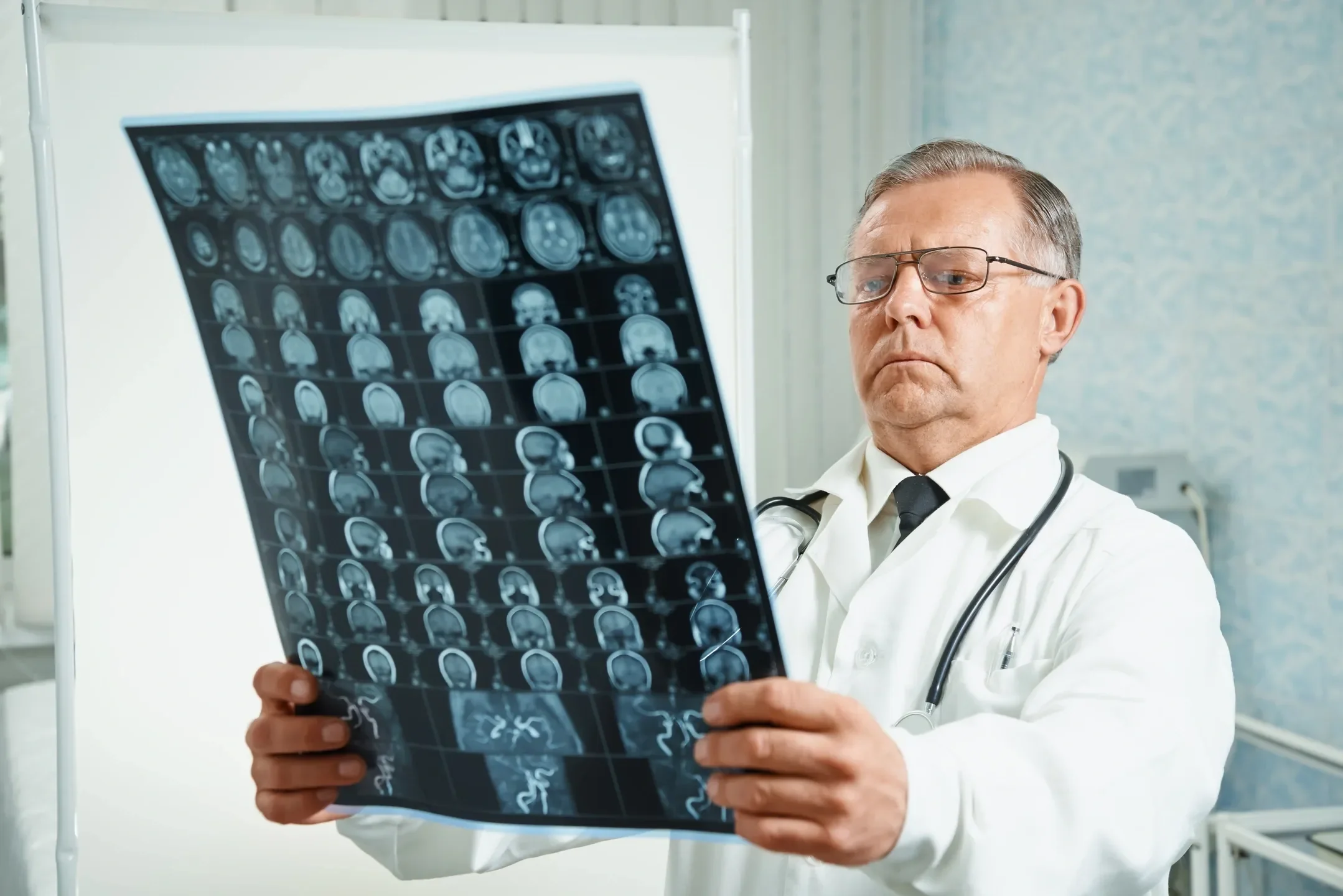
An abnormal MRI can be important, but it does not explain itself. Its importance often depends on when it was obtained and what was happening with the child at the time. The expert places that finding within the larger clinical course before reaching an opinion about cause.
Once the timeline is clear, the expert can assess not only whether a theory could explain the outcome, but also how well it fits the child’s actual course and whether the record supports another explanation.
| Medical question | Appropriate expert role | Where the expert should stop |
|---|---|---|
| What neurologic condition is present? | Evaluate whether the history, examinations, testing, and course support a diagnosis or differential diagnosis. | Do not treat a chart label as conclusive when supporting findings are absent or conflicting. |
| What do the MRI and EEG findings mean? | Explain their neurologic significance and integrate them with the clinical course. | Do not claim that one image or tracing proves timing or causation when it does not. |
| When did the dysfunction occur? | Assess whether the chronology and evolution support a medically reasonable time frame. | Do not assign precision the records or science cannot support. |
| What caused the child’s condition? | Evaluate proposed mechanisms, temporal sequence, supporting evidence, and reasonable alternatives. | Do not convert temporal association or possibility into causation. |
| What is the likely prognosis? | Discuss expected outcomes, relevant modifiers, and uncertainty. | Do not guarantee an individual outcome or ignore limited follow-up. |
| Was the care within the standard of care? | Offer an opinion when the issue falls within the expert’s current training and experience. | Do not substitute for specialists whose distinct conduct is outside pediatric neurology. |
| Who should win the case? | Explain medical evidence to help the factfinder evaluate disputed issues. | Do not decide legal liability, credibility, damages, or the verdict. |
A pediatric neurologist may be well positioned to address diagnosis, neurologic examinations, seizures, EEG findings, the neurologic significance of imaging, developmental consequences, prognosis, and possible mechanisms of injury.
In an appropriate case, the expert may also address medical causation or a pediatric neurologic standard of care. But board certification alone does not make one physician an expert on every question involving a child or the brain. The opinion must match the expert’s actual training, clinical experience, and knowledge of the subject at issue.
These cases may overlap with neonatology, obstetrics, neuroradiology, genetics, critical care, neuropsychology, rehabilitation, nursing, and other fields. A pediatric neurologist can integrate information from those disciplines and explain its neurologic relevance. That does not mean the neurologist should automatically offer opinions about every specialty’s conduct.
Knowing when another expert is needed is a big part of doing the work well.
An expert cannot create facts the record does not contain. One later abnormal value is unlikely to provide enough information to determine the duration of an unmonitored event. When the evidence supports only a range, the expert should not assign a precise injury time. The expert also should not dismiss reasonable alternatives merely because one explanation is preferred.
The expert also should not rely selectively on favorable records while disregarding conflicting evidence. The same analytical standard should apply whether a finding helps or hurts the retaining party.
Depending on the jurisdiction and issue, a physician may offer an opinion that bears directly on a disputed fact. But, the physician’s role remains medical: to explain the evidence, the reasoning behind the opinion, its limitations, and where any uncertainty might linger. Courts do not all draw this boundary in exactly the same place, but the judge or jury ultimately determines the legal result.
An expert opinion does not become advocacy simply because it supports the retaining party. Independent analysis can legitimately favor a plaintiff, a defendant, or neither.
The boundary is crossed when the method changes to reach a desired result.
That may occur when an expert ignores inconvenient records, uses absolute language for an uncertain proposition, treats a possible mechanism as well established, ventures beyond the expert’s field, dismisses reasonable alternatives without analysis, or selects facts to fit a litigation theory rather than testing the theory against the full record.
Attorneys are advocates. Medical experts are not. Although an expert is retained and compensated by one side, the medical opinion should not be owned by that side.
A useful test is whether the expert would apply the same reasoning if opposing counsel had supplied the identical records. If the answer changes with the identity of the retaining party, the analysis has moved away from independent expertise.
The expert should absolutely say so.
Sometimes additional records can clarify an apparent conflict. The original imaging, a missing EEG, a more complete developmental history, or testimony about timing may materially change the analysis. The appropriate next step may be to request that information before reaching a final opinion.
Sometimes the evidence supports only part of the proposed theory. An event may account for an acute neurologic change without explaining every later impairment. The expert should make that distinction clear.
Not every consultation confirms the original theory. If the medical evidence does not support the proposed allegation, the expert should communicate that before the case moves further along in the process. The review may also show that the key question at the heart of the case belongs to another specialty.
Some cases remain uncertain even after careful, comprehensive review. However, that does not place every possible explanation on equal footing. The timing or MRI pattern may support one cause more strongly than another. If the record cannot distinguish between two reasonable explanations, the expert should clearly acknowledge that uncertainty.
Research describes what tends to happen across large groups of patients. An expert opinion must address what happened to this child. The physician cannot answer that question by reading and synthesizing studies and medical literature alone. Many years of training and experience evaluating and treating children with similar conditions are invaluable in helping the expert decide whether the published findings fit the child’s course and how confidently to state the opinion.
Medical literature may be supportive and can help in establishing patterns and associations, but an individual case still requires application to the child’s facts. Conversely, imperfect certainty does not make every conclusion unavailable. The task is to explain how strongly the evidence supports an opinion and why.
An expert should also be willing to revise an opinion when meaningful new information becomes available. Consistency should come from stable methodology, not from defending an earlier conclusion after its factual basis has meaningfully or significantly changed.
The expert strengthens an opinion by clearly tracing the path from evidence to conclusion. Attorneys can prepare more effectively when they understand which findings carry the most weight, where the evidence conflicts, what information the record lacks, and when the case calls for input from another specialist.
In deposition, opposing counsel may press the expert on evidence that could point in other directions. The expert should address that evidence directly rather than stretch and overextend the opinion in order to explain it away. Sometimes the most credible answer is simple: “The record does not support that conclusion.” The expert should be equally clear when a question falls outside pediatric neurology.
Before retaining a pediatric neurology expert, counsel should ask whether the expert’s clinical experience matches the issue, what information will be needed, how conflicting evidence is handled, what falls outside the proposed scope, and whether the expert will explain both the strengths and limitations of the opinion.
The strongest expert is not the one who promises the most. It is the one whose conclusions remain medically sound regardless of who asked the question.
A pediatric neurology expert witness may evaluate diagnosis, chronology, neurologic findings, EEG, imaging, treatment, developmental outcome, prognosis, and possible causation, as well as standard of care when appropriately qualified to do so.
Independence matters most when the record does not support the proposed theory. The expert should explain what the evidence shows and be equally clear about what remains unknown. If another specialty is better suited to the question, the expert should say so. The physician’s role is to offer a medical opinion, not to defend one side.
This article is provided for general educational purposes only. It is not medical or legal advice, and it does not create a physician–patient or consulting relationship.
Every case is different. No conclusion about causation, standard of care, or prognosis in an individual child can be drawn from this general article. Those questions can only be answered after reviewing the child’s full medical history and records. Nothing here reflects an opinion about any specific case.
If you would like to discuss a case involving a pediatric neurologic injury or other pediatric neurology issue with a pediatric neurologist, contact Brian Woodruff, MD, brian@childneurologyexpert.com